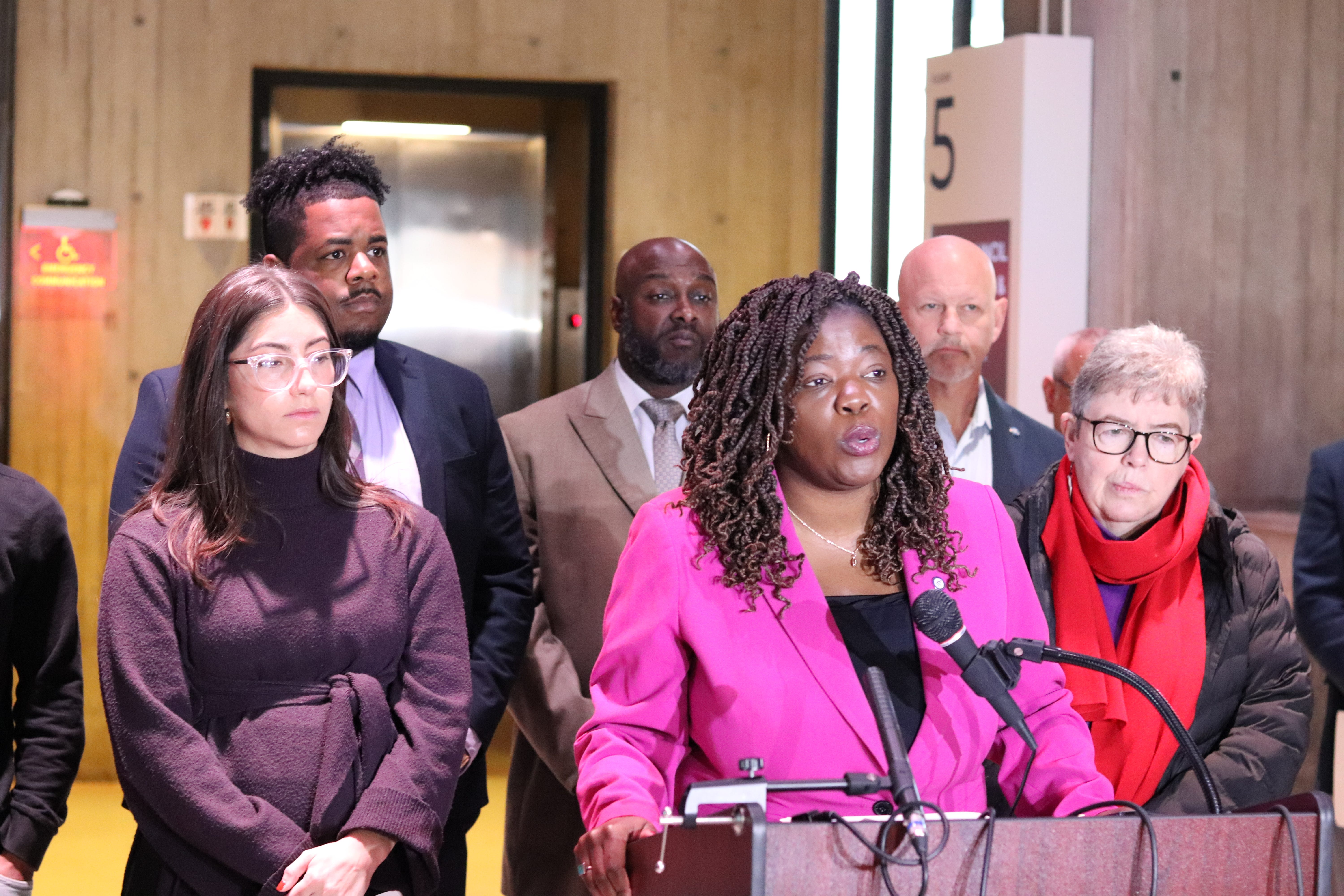
Ahead of a Boston City Council hearing today to consider Mayor Wu’s tax shift proposal, various City Councilors and unions gathered to a press for passage of the home rule petition, especially in the reluctant state senate where the proposal died last year.
We asked Boston City Council President Ruthzee Louijeune: How is Wu’s tax shift proposal a proportional tax break for commercial property owners?
“What this proposal would do instead of experience a 5% decrease this shift would ah, reduce slightly the extent of the decrease that commercial property owners see in their tax bill but it would still be a decrease,” Louijeune explained.
The Wu proposal would raise tax rates on Boston commercial property for the next three years, the City budget grew 4.4% this fiscal year and 8% the prior year.
During the hearing Councilor Sharon Durkan asserted that “commercial owners don’t care about what happens here...its just the cost of doing business.”
Wu predicts a 6% drop in the commercial sector next year, official data released by the City late last week indicate commercial values fell 3.9% and 2.9% over the last two years. Residential values are up 2.7% and 4.6% over the same two year period.
Last week we conducted a walking tour of crumbling downtown Boston commercial real estate values, where some properties have fallen as much as 60% of pre-pandemic highs.
“I do believe we are in a post-covid era,” Louijeune stated when asked who is responsible for crashing downtown values, a trend she asserted is effecting cities nationwide.